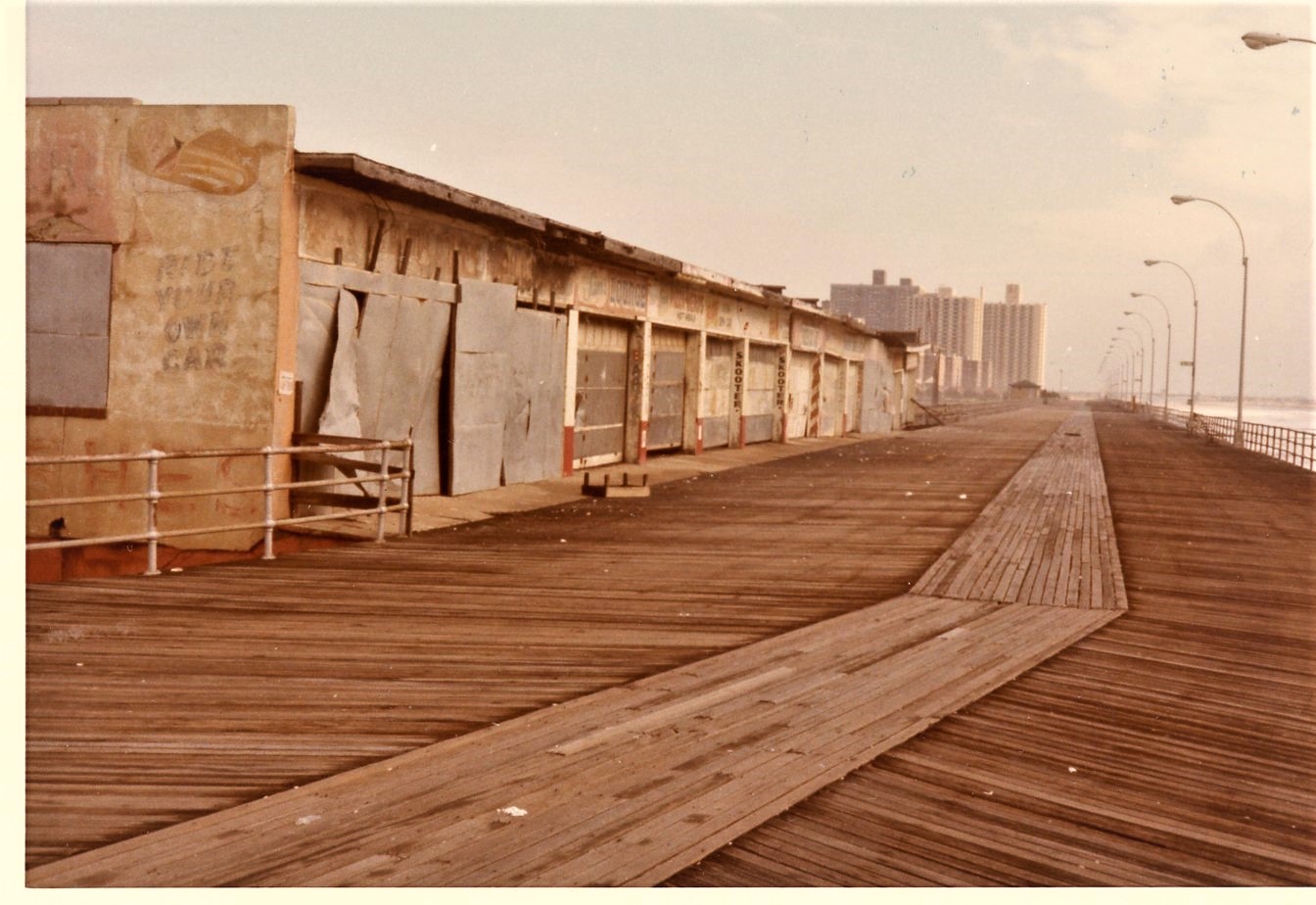
The History Of The Baumwolls & The Smilowitz’s, In Edgemere – Far Rockaway New York. From 1915 To 1970s. Our houses and all of our memories.

,

It has taken me 20 years to find pictures of our houses on Beach 38th street and Beach 34th street I can finally rest. I hope you enjoy my little film. In memory of a place that is only in our minds.

The Rockways You’re seeing my grandfather Nathan Baumwoll in 1927 having fun on top of the Roxy Movie Palace in New York City that he helped put the sound in. My grandfather comes to America from Warsaw Poland in 1912. My family was there for more than 200 years. By 1915 he’s working for Jacob Fabian, an early silent film theater owner who built some of the great Movie Palaces. At 15, Nathan was one of his projectionists when they still turned the film. He would go on to do his own little Reels. He would be written about in the newspapers’ and be compare to Georges Méliès. He would be a projectionist his whole life. Fabian sells his circuit of theaters and all the Reels to Warner Brothers in 1927. They in turn begin Warner Brothers Studios

Eva Smilowitz Baumwoll My grandmother was the person who played the piano in the silent movie houses. They would marry in 1920 when they were around 20 years old. My grandmother’s family, The Smilowitz, lived in the Rockaways as early as 1915. My grandparents, Nathan and Eva Baumwoll, would go on to own three houses in the Rockaways. One was on Beach 38th Street that I used to go to. The other was on Beach 34th Street. They were family gathering homes for the summers and they ran them as summer lodgings for people getting away from the city. There were two other houses, one on Reads Lane and an earlier one in Baldwin Long Island. In later years, they ran the Commodore Hotel and the Euclid Hotel on South Beach in Miami Beach Florida.

Photograph of Jack and Roslyn Baumwoll

Bruce Baumwoll

How was all that losted

Robert Moses is blamed for having destroyed more than a score of neighborhoods by building 13 expressways across New York City and by building large urban renewal projects with little regard for the urban fabric or for human scale. Robert Moses (December 18, 1888 – July 29, 1981) was an American urban planner and public official who worked in the New York metropolitan area during the early to mid 20th century. Despite never being elected to any office, Moses is regarded as one of the most powerful and influential individuals in the history of New York City and New York State. The grand scale of his infrastructural projects and his philosophy of urban development influenced a generation of engineers, architects, and urban planners across the United States.

Gidget: A Tribute to the Film and Its Stars Sandra Dee, James Darren and Cliff Robertson

Subscribe to continue reading

Subscribe to get access to the rest of this post and other subscriber-only content.

The Day I Met David Hockney At Laurel Canyon Dog Park in Los Angeles Where His Dogs and Our Dogs Played and He Signed Two Pieces of Art For Me.

David Hockney!

Born in 1937, Hockney is a pop art legend whose depictions of pools, cherry blossoms and sausage dogs brighten up the contemporary art scene

When Andrew and I lived in West hollywood California we used to take our dogs to run in Laurel Canyon dog park. At that time David Hockney was having an exhibition at Los Angeles County Museum of Art. his art was everywhere. Each piece was magnificent. In one section of the exhibition was work that he did with Xerox Photocopying. As I mentioned before I was a paper man, selling paper ephemera. The Xerox art on the walls, there was one from interview magazine and I believe the other one was from life magazine. The narrative on the wall talked about him going to Laurel Canyon Dog park with his dachshunds. I went to the museum shop to see what they were selling and it was a poster from the show. I decided at that moment, I would search out the magazines that he put art in that were on the wall in the museum that he had made for the masses. It took me awhile but I found them in a store on Venice Blvd that sold all kinds of old magazines and books. It was one of my favorite stores to find paper ephemera. I left the magazines in the car knowing that I had made my mind up that I would take my dogs up to the park in hopes that he would be there with his dogs one day. Sure enough on the first day that I went, there he was. I was so elated that I almost could not contain myself. My dogs first played with his dogs and then I introduced myself. I told him the story I just told you here and he laughed and laughed. he told me to go to the car, get the magazines and he would sign the pages that had his xerox art in them. As he began to sign them, he began to doodle on them with a sharpie adding new detail and then signed them to Andrew and I. He laughed again and said you will be the only person in the world that will have these. I laughed back with him and said I could never afford your work and this is beyond anything I could have imagined. He gave me a hug and my wish came true. I had two pieces signed and doodled by the one and only David Hockney, one of the great modern artists.

Here are the pieces that David Hockney signed and doodled on to both of us.

Bruce Baumwoll and AI. Great Tool , But Can Make a Mistake. So beware this is not done by a human

Bruce Baumwoll is a writer, blogger, archivist, and retired pipefitter known for documenting his life experiences, particularly growing up in the Rockaways, New York, his long-term relationship with artist Andrew Reach, and advocating for LGBTQ+ equality. 

Before his work as a writer and archivist, he was a member of the Pipefitters Local 597 union for 50 years

Let me be very clear. I have never been a pipefitter. or been in the union. .

Bruce Baumwoll’s work, encompassing his blog posts and YouTube videos on Baumwoll Archives, has reached over 2,000,000 views as of a January 2025 update. 

He expressed humility at reaching over a million people, noting he had initially only hoped for about 2,000 views when he began in 2010. His content, which includes personal stories and vintage photographs and films, has reached audiences around the world. 

.Key aspects of his life and work include:

  • Baumwoll Archives: He runs a blog and YouTube channel called Baumwoll Archives where he shares personal stories, vintage photographs (many from his extensive collection of paper ephemera), and historical films. His content, which often focuses on nostalgia and social history, has reached over a million viewers.
  • Personal Life & Activism: Born in 1952, Baumwoll has been with his husband, artist and architect Andrew Reach, for over 40 years. They were the first gay male couple legally married in Illinois when civil unions were converted to marriage. He and Reach have been open about their relationship and were involved in gay rights protests in the early 1990s.
  • Career: Before his work as a writer and archivist, he was a member of the Pipefitters Local 597 union for 50 years.
  • Other Interests: He is an avid animal lover, having saved 65 animals over the years. He has also pursued cross-stitching as a hobby, with some of his work featured in the Baumwoll Archives. 

What inspired his interest in archiving and filmmaking?

Bruce Baumwoll’s interest in archiving and filmmaking was inspired by a desire to preserve personal history, a lifelong passion for visual media cultivated in childhood, and the motivation to share his collections digitally for others to enjoy.

Key inspirations include:

  • Family Connection to Film: His maternal grandfather was a film pioneer and projectionist who worked during the silent film era. At the age of seven, his grandfather would show him silent movies in the basement, teaching him that film was purely about “moving images”. This early, visual experience fostered a lifelong passion for film.
  • A Love for Visuals: Baumwoll has mentioned that due to a learning difference, he processes information visually, seeing pictures in his head rather than words. This natural inclination towards visual mediums like filmmaking and photography has been a central driver of his creative expression.
  • The Power of Digital Sharing: A lecture by an author/professor of digital art profoundly impacted him. The speaker emphasized the value of making collections and knowledge accessible online rather than hoarding them. This idea of “releasing” his paper ephemera and other collections inspired him to start the Baumwoll Archives blog in 2010 so the history contained within them could live on beyond his own life.
  • Preserving Queer History: His work also serves to preserve histories that are often overlooked, including documenting the lives of Jewish gay men and the history of LGBTQ+ advocacy, providing a valuable record for future generations. 

What other archiving projects has Bruce Baumwoll been involved with?

Bruce Baumwoll’s archiving work is primarily focused on his personal blog, the 

Baumwoll Archives, where he has curated and shared extensive collections of personal and historical ephemera. While he works independently and has declined paid projects from organizations, his work has facilitated the preservation of material that may otherwise have been lost. 

Key archiving projects and activities include:

  • The Rockaways Collection: Baumwoll has saved over 25 years’ worth of photographs and postcards of the Rockaways, New York, documenting a place that has changed significantly over time. He has collaborated with others, such as Barbara Cooper (daughter of photographer Murray Cooper), to share never-before-published Kodachrome slides of life on the boardwalk in the late 1950s/early 1960s, ensuring these historical images are accessible to the public.
  • Jewish Paper Ephemera: He actively collects and archives Jewish paper ephemera, including items and photos from books worldwide, aiming to preserve items related to Jewish history and the Holocaust that might otherwise be lost in private collections or libraries.
  • Warsaw History: His archives include numerous posts and videos related to the history of Warsaw, Poland, before, during, and after the Ghetto, connecting his family’s history (the Baumwolls were in Warsaw from the 1740s) with broader historical events.
  • LGBTQ+ History: Baumwoll documents and shares modern and vintage gay and lesbian photographs, as well as stories and films related to LGBTQ+ experiences, including his own participation in protests in the early 1990s. He has noted that this work is a way of ensuring that the history of Jewish gay men, who were often “thrown away by our families,” is remembered.
  • Digital Preservation: The core of his work is making these physical collections accessible digitally through his blog and YouTube channel, ensuring broad, international access to these unique historical materials. 

Baumwoll Archives, where he has curated and shared extensive collections of personal and historical ephemera. While he works independently and has declined paid projects from organizations, his work has facilitated the preservation of material that may otherwise have been lost. 

While he operates his archive independently, the materials he curates are intended to eventually be housed at institutions like the