Two For The Road, Starring Audrey Hepburn & Albert Finney & Jacqueline Bisset – My Saturdays At the Strand Movie Palace in Far Rockaway New York – 1967

Watch my tribute to these two greats, I hope you enjoy my little fim.

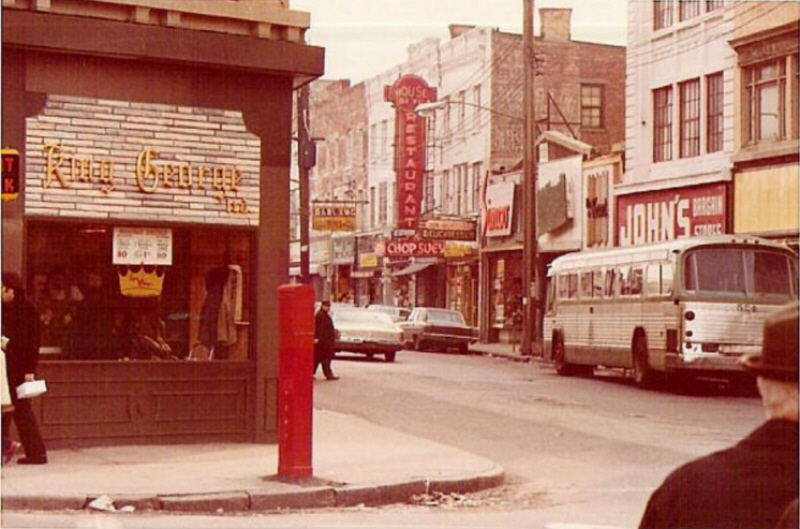
My Saturdays At the Strand Movie Palace in Far Rockaway New York  1967

I spent many afternoons in the Strand  movie palace on school days and always on Saturday, often alone in the big movie house during the week. I  would watch films in chairs that were made for two people to sit in, It was a great old movie Palace. So many families during the 1920 – 1960s would spend a Saturday night walking in town  and than catching a movie. Often we would go to our favor places to eat before we would all see the new movie out this week. So many wonderful times.

twoforroad

Two For The Road

Starring

Audrey Hepburn , Albert finney and Jacqueline Bisset

From a collection of movie stills and photographs taken on the set 

1417566_546038622145318_399116799_o

Click here to see my photo gallery from the film and on the movie set.

Click here to see my photo gallery from the film and on the movie set.

From Wikipedia, the free encyclopedia

Two for the Road is a 1967 romantic comedy-drama directed and produced by Stanley Donen, starring Audrey Hepburn and Albert Finney. The film tells the story of a married couple who reflect on their twelve-year relationship while on a road trip from England to the French Riviera. As they survey their foundering marriage in the present, the evolution of their relationship reveals itself through vignettes from four previous trips they took along the same route. The film was made from an original screenplay by Frederic Raphael. Supporting cast members include Eleanor BronWilliam DanielsClaude Dauphin, and Nadia GrayTwo for the Road was Hepburn’s penultimate performance before her semi-retirement in 1968.

Upon its release the film received mostly positive reviews but failed to make a profit. Its mixed response was in large part due to its experimental, non-linear structure, and coalescence of commercial and artistic filmmaking. Additionally, Hepburn’s role as a wife and mother in a collapsing marriage was a radical departure from the ingénues she typically had played hitherto. In subsequent years, the film’s reputation has grown substantially, with numerous authors citing it as Donen’s greatest film, and Hepburn’s performance as the best of her career.

Raphael conceived the idea for the film while driving with his wife to the south of France. He suggested the project initially to producer Joseph Janni, who declined it, and then wrote the script for Donen. Originally the film was to be distributed by Universal, but after the studio backed out, Donen took the project to Twentieth Century-FoxTwo for the Road is notable for combining the styles of a traditional Hollywood romance with elements of the French New Wave. Cars figure prominently in the film and, when the narrative jumps in time, help to establish the current year. Two for the Road was a rare Hepburn picture in that she did not wear a wardrobe designed by Hubert de Givenchy, because Donen wanted her to have a more conventional appearance. The film’s soundtrack was composed by Henry Mancini, who called the theme song his favourite piece of music he wrote.[4] Principal photography began on 3 May 1966 and concluded on 1 September. The film was released on 27 April 1967 at Radio City Music Hall in New York City.

Plot

In 1966, English architect Mark Wallace and his wife Joanna fly to France (when he thinks he forgot his passport, his wife hands it to him casually) then drive to Saint-Tropez to meet Mark’s longtime client, Maurice Dalbret. Joanna complains that Mark is constantly at Maurice’s beck and call, and Mark points out she enjoys the luxuries his hard work provides. They reflect on previous trips.

In 1954 Mark and Joanna cross paths on a ferry leaving England. Mark is studying European architecture, while Joanna is travelling with her choir to a festival in Menton. When the ferry arrives in Dieppe, Mark panics thinking he lost his passport; helpful bystander Joanna finds it in his backpack. When the choir’s van runs off the road, Mark stops to help. He travels with the girls to Abbeville, intending to pair off with the beautiful Jackie, but after everyone else catches chickenpox, Joanna attaches herself to Mark. Mark tries to ditch Joanna, suggesting they travel separately. After hitching a ride with a slick driver in an Alfa Romeo, Joanna returns to join Mark, telling him that she loves him. He warns her that he does not intend commitment. At the Mediterranean, they stay in cheap hotels, spending their days at the beach, and Joanna proves to be an adaptable and ideal companion. At the end of their week, Mark asks Joanna to marry him.

In 1957 the Wallaces have been married for two years. They travel by car with Mark’s former girlfriend from the University of Chicago, Cathy Seligman, her husband, Howard Maxwell-Manchester, and their demanding young daughter, Ruthie. In a tantrum Ruthie tosses away the car keys, causing a long delay as the adults search the nearby brush, until Joanna orders Ruthie to disclose where she threw the keys. A pedantic Howard suggests that Joanna resents Ruthie, who represents the child she wishes she had. After Ruthie says that Cathy called Joanna a “suburban English nobody,” Mark insists they leave the Maxwell-Manchesters and continue travelling by themselves. Mark asks Joanna sardonically whether she really wants a Ruthie of their own.

In 1959 the Wallaces travel as a married couple on a limited budget, driving a rundown MG. When Joanna announces she is pregnant, Mark attempts enthusiasm. After the car catches fire, the Wallaces pull into a luxury hotel they can ill afford, the Domaine Saint-Just. To save money, they sneak in sparse food, only to find at checkout the seasonal price includes charges for breakfast and dinner. While they push the burnt-out car for disposal, a Bentley S1, belonging to wealthy couple Maurice and Françoise Dalbret, causes them to crash the MG into a barn. Maurice pays off the barn’s owner, and the Wallaces travel with the Dalbrets. At the end of the trip Maurice hires Mark’s architectural services.

The birth of Caroline results in Joanna’s staying home and Mark’s traveling alone to France. He has a one-night stand with a driver named Simone while he writes to Joanna lying about his activities and claiming to “miss” her.

In 1963, Joanna and young Caroline accompany Mark to a project for Maurice. Parenthood causes travel complications and strain in the marriage, with Mark admonishing Joanna that he never wanted a child. The two consider separating, and Joanna bitterly reflects that he never really wanted anything else. At the Dalbret property, Joanna meets Françoise’s brother, David, who seduces her. When Mark confronts them, Joanna confesses she is in love with David. David gives her the choice to leave Mark for him; however, she returns to Mark, missing his sense of humor.

In the present, the Wallaces discuss divorce. Mark remains engrossed in work, paying little attention to Joanna. At a party at the Dalbret’s new house, designed by Mark, David again approaches Joanna; Mark is jealous until David announces his engagement. When Maurice again demands a consultation with Mark, Mark and Joanna sneak out of the party. While driving away, they admit to one another that despite their frequent unhappiness and past unfaithfulness, they love one another and could never be apart.

At the France–Italy border, Mark believes he has lost his passport, but Joanna once again playfully provides it for him.

Cast

Production

Writing and casting

Raphael conceived the idea for Two for the Road in 1963 while driving with his wife from London to Rome. This was a trip the couple had taken many times through their relationship, having first done it hitchhiking and now driving in an expensive car. He described himself thinking during the drive, “imagine if we overtook ourselves on the road ten years ago. Ten years seemed a long time in those days. Then I said, ‘wait a minute. That’s a movie.’ “[5] Raphael floated the idea to producer Joseph Janni, with whom he was working at the time on the picture Darling, directed by John Schlesinger. Janni thought it was a good idea, but did not pursue it.

After Darling, Raphael was asked by Norman Panama to write the script for Not with My Wife, You Don’t! Raphael told his agent it was a “vulgar, banal story” and that he could not do it, but his agent persuaded him to take the project, which would pay £9,000. Not long after he began writing, Raphael decided he had to quit the film, even though reneging on the contract might cost him his reputation in the film industry. Raphael met in London with Panama, who agreed to let him go. During the meeting, Panama mentioned that at a recent dinner party Stanley Donen had expressed his praise for the writing in Nothing but the Best. At the party, Donen had said to Panama about Raphael, “you lucky SOB. Why haven’t I got him?”[6] Panama offered to ask Donen to phone Raphael.

After talking on the telephone, Donen and Raphael met in London in 1964. Raphael has given differing accounts of when he suggested the Two for the Road idea to Donen. In one instance he claimed to have mentioned it at their first meeting,[7] and in another he said that he and Donen went back and forth for a time before he brought it up.[6] In either case, Donen was intrigued by the concept and gave Raphael $40,000 to write the script. After the project was underway, Donen telephoned Audrey Hepburn to see if she was interested in it. Having just finished the unsuccessful Paris When It Sizzles, which used some of the same non-linear storytelling Raphael intended for Two for the Road, she did not want to participate.[8] Nonetheless, Raphael and Donen decided to proceed with the script.

The story was not autobiographical, but was inspired by Raphael’s own marriage. He said that the events in the story were “based mainly on the experiences of my wife and me, but with a certain degree of expansiveness. These are not necessarily things that happened, but what might have happened.”[8] Raphael wrote the first draft of the script in the fall of 1964 while staying with his family in an apartment on the Via Francesco Ferrara in Rome.[9] To compose the work, he wrote individual scenes on cards then rearranged them on the floor, creating a mosaic effect. Raphael sent the typed script to Donen in England on Wednesday, 11 November. After reading the script, Donen telephoned on Friday, 13 November to say he thought it was the best script he had ever read.[10] Despite her previous rejection, Donen then sent the script to Hepburn, who agreed to meet in Switzerland to discuss it. In January 1965, Donen and Raphael flew to Switzerland to meet Hepburn at her home in Bürgenstock and try a second time to convince her to work on the film. When they met, Hepburn told the men, “I don’t want to say too much about how much I like the script of Two for the Road, in case it embarrasses Frederico.”[11] However, Hepburn was concerned over the effect it would have on her pudique image to play a part that included nudity, premarital sex, and adultery.[12] Donen and Raphael allayed her fears and convinced her to accept the role.[8] Hepburn signed for $750,000, her standard rate at the time.[13]

Donen took the picture initially to Universal, who had distributed his previous two films. His first choice for the leading man was Paul Newman, whom he sent the script. Newman declined the part on the grounds that it was a “director’s picture” unsuited to a major star.[14] After Newman’s rejection, Universal dropped the project. Given he had signed a contract with Hepburn already, Donen could not abandon the project and was forced to find another studio. He managed to secure backing from Richard D. Zanuck at Twentieth Century-Fox. Zanuck gave the film $5 million to work with, and explained to Donen that the studio’s 1966 Oscar budget would be dedicated to Doctor Dolittle.[15] Donen’s second choice for the lead male part was Albert Finney, who signed in early September 1965 for $300,000. At the time, Finney’s only major credit was Tom Jones, and he was largely unknown in the United States. Donen said later he was quite nervous about giving the part to Finney. In December 1965 Hepburn became pregnant, which would set the filming back at least a year. However, in January 1966 she miscarried, which allowed the movie to go ahead.[14]

Finney and Hepburn had never met, so Donen arranged a luncheon in Paris for them. At the meeting, Finney brought with him a male friend, and for the first part of the meal pretended to be an effeminate homosexual. Donen said that “the entire lunch, Audrey’s jaw kept dropping.”[16] Unable to contain himself anymore, Finney burst out laughing and quit the performance. The gag served to break the ice between the two leads.[17]

After seeing the film A Thousand Clowns, Donen decided on the spot to offer the parts of the American couple to William Daniels and Barbara Harris. At the time, Daniels and Harris were both in the stage musical On a Clear Day You Can See Forever. Daniels accepted the part, but Harris turned it down to continue appearing in the musical. The part of the wife went instead to English actress Eleanor Bron. Before Daniels flew to France for filming, Donen instructed him to purchase two madras jackets for his character to wear. The ostentatious jackets, a staple of Ivy League fashion, would accentuate the “ugly American” traits of Daniels’s character.[18] The part of Mark and Joanna’s daughter Caroline went to child actress Kathy Chelimsky. Four years earlier, Kathy’s older brother, Thomas Chelimsky, had played the part of Jean-Louis Gaudel in Donen and Hepburn’s previous collaboration, Charade.

Filming

Hepburn and Finney by the Poste électrique du Plessis-Gassot during filming

The filming of Two for the Road began on 3 May 1966, the day before Hepburn’s 37th birthday and 6 days before Finney’s 30th jubilee birthday. Hepburn was seven years older than her Finney, which was highly unusual for her, as previously in her career she had always been considerably younger than her male co-stars. At the time, Hepburn’s marriage to Mel Ferrer was breaking down. During the production she went to France alone while Ferrer elected to remain in Tolochenaz with their son, Sean Ferrer, and negotiate the production of Wait until Dark. Donen noted of Hepburn that “she was very strung up as we began filming. It was Albert who helped put her at ease.”[19] Finney, who came from a Northern working-class background, was in many ways the antithesis of the aristocratic Hepburn and was able to draw out a previously unseen side of her personality. As filming went on, the two became increasingly close and spent much of their time together outside of work, going out to eat and dance in the evenings.[20] Finney later reflected on their relationship, explaining, “doing a scene with her, my mind knew I was acting but my heart didn’t, and my body certainly didn’t! Playing a love scene with someone as sexy as Audrey, you sometimes get to that edge where make-believe and reality are blurred. […] The time spent with Audrey is one of the closest I’ve ever had.”[21] Finney regularly teased Hepburn, calling her “tawdry Audrey” and “Audrey Sunburn.”[22] Author Irwin Shaw, who visited the set, said of Hepburn, “she and Albie had this wonderful thing together, like a pair of kids with a perfect shorthand of jokes and references that closed out everybody else. It was like a brother and sister in their teens. When Mel was there, Audrey and Albie got rather formal and a little awkward, as if now they had to behave like grown ups.”[23]

The nature of Finney and Hepburn’s relationship or how it ended was never disclosed. An unnamed source related, “if [Albert] and Audrey did make love, then they were discreet about it. But no one doubted the warmth between them.”[24] Charles Higham wrote that “William Daniels […] says that he wouldn’t deny (though he didn’t actually know) that Audrey and Albert were lovers.”[25] According to biographer Donald Spoto, when filming finished in early September 1966, Ferrer threatened his wife with divorce if she did not end the relationship. As the divorce would have been filed on the grounds of her infidelity, Hepburn would risk losing custody of her son. Spoto said that, at this time, “everyone around her noted a fearful expression and nervous anxiety that even Finney was unable to alleviate.”[26] Sean Ferrer explained later, “I remember there was a tension in my parents’ marriage at that time. Only years later did I realize it was because she was having an affair with Finney during the making of that movie.”[27] Hepburn remained silent about the relationship, though Finney hinted at it to friends. Robert Sallin claimed that Finney told him about the affair and said Hepburn was “rather like a blooming flower and then when her husband arrived, the flower closed up and shriveled.”[28] Hepburn’s partner later in life, Robert Wolders, said that “Audrey cared for Finney a great deal. It was the beginning of a new period of her life.”[29]

Hepburn and Finney’s closeness during the making of the film translated in their performances. Donen said later, “the Audrey I saw during the making of this film I didn’t even know. She overwhelmed me. She was so free, so happy. I never saw her like that. So young! I guess it was Albie.”[30] Hepburn, who was in her late 30s and insecure over her “dreadful thinness,” was uncomfortable doing some of the beach scenes in which she was to wear a bathing suit. Finney, however, convinced her, saying “you’re really an eyeful, Audrey.”[31] Donen also struggled to convince Hepburn to do the scene at the Dalbret villa where she is thrown in the pool. As a nine-year-old, Hepburn had tangled her feet in weeds in a pond and nearly drowned, and remained terrified of water her whole life. After three days of coaxing her and denying her request for a body double, Donen got her to do the scene, albeit with two assistants waiting to pull her out after the shot.[32]

The Dalbret scenes were filmed at a villa in L’Oumède, Ramatuelle. In the summer of 1968, the same villa was used as the principal location in the film La Piscine starring Alain Delon and Romy Schneider. The scene in which Schneider stands over Delon on the pool deck may have been borrowed from the scene in Two for the Road where Finney stands over Hepburn.

In the dialogue Joanna says that Mark was born in 1933, however, beyond that Raphael did not provide any background information about his characters. Donen invented several biographical details that are revealed on the passport the Wallaces use on their 1959 trip. The passport shows that Mark was born on 22 August 1933 in Chester, while Joanna was born on 11 July 1936 in Brentford. This makes Joanna only 18 years old in the scenes that take place in 1954, and Mark 21 years old. Hepburn often played characters much younger than her actual age, and despite her being 37 during filming, wardrobe, hairstyling, and acting techniques were used to make Hepburn believable in the role. The same techniques are notably not used on Finney’s character, so Hepburn’s styling does most of the work in helping the audience determine what time period each scene takes place in. Joanna’s occupation is listed as “housewife,” which contradicts the script, when she later says “by the time I get home from work, it’s pitch black.” At the time, their residence is listed as Surrey. The detail of Mark’s forgetfulness was inspired directly by Raphael’s own.

Much of the dialogue had to be re-recorded due to the sound of outdoor generators on set. However, by the time of post-production, Jacqueline Bisset had left for the United States to make The Detective. Donen hired another actress to read Bisset’s parts and tried to get as close a match as he could. Consequently, Bisset’s voice in the film is not her own.

The Wonderful world of Rockaway’s Playland

For all who grew up in the Rockaways remember Playland. Whether you were  very young with all your families your first time.  One can never forget this wonderful place. As  we grew older many of us went there to hang out as they use to say and just be there on a saturday with our own friends. Again it was a simpler time. For a few dollars we could be with our friends or by ourselves. Remembering All the smells and the grit of the place is another feeling of home.  I have been collecting photograph and postcards for over 30 years now . Its fun to put them all together for all to see this wonderful place. I hope you enjoy all your own memories.

Bruce Baumwoll

Watch the video below, I hope you enjoy.

Click here to see my photographs of Rockaways Playland gallery.

Photo by Julie Wilson

Woody Allens : Radio Days

Click here to see my photographs of Rockaways Playland gallery.

The Wonderful Film Beautiful Thing – A Story of Teenage Love – And The Cast Reunion Article on Glen Berry Blog. Its been 25 years.

Stills From the Film Beautiful Thing

Directed by Hettie Macdonald

Screenplay by Jonathan Harvey based on his original play

Starring
Glen Berry
Scott Neal
Tameka Empson

Music
“Words of Love”
The Mamas & The Papas Featuring Mama Cass

111044__beautiful_l

3424756_gal (1)

3897077_gal

Click here to see the gallery of the photographs from the film

4318354_std

beautiful09 (1)

Beautiful-Thing-starring-Scott-Neal-Glen-Berry-07

Beautiful-Thing-starring-Scott-Neal-Glen-Berry-05

Beautiful-Thing-starring-Scott-Neal-Glen-Berry-06

Click here to see the gallery of the photographs from the film

4318120_std (1)

 Read below about the Cast Reunion Article

attitude magazine april 2013 (6)
attitude magazine april 2013 (1)


click here to see Glenn Berry Blog about cast reunion

attitude5
attitude6
glen berry and scott neal
GLEN BERRY
photoshoot 20133
photoshoot 20134
photoshoot 20135

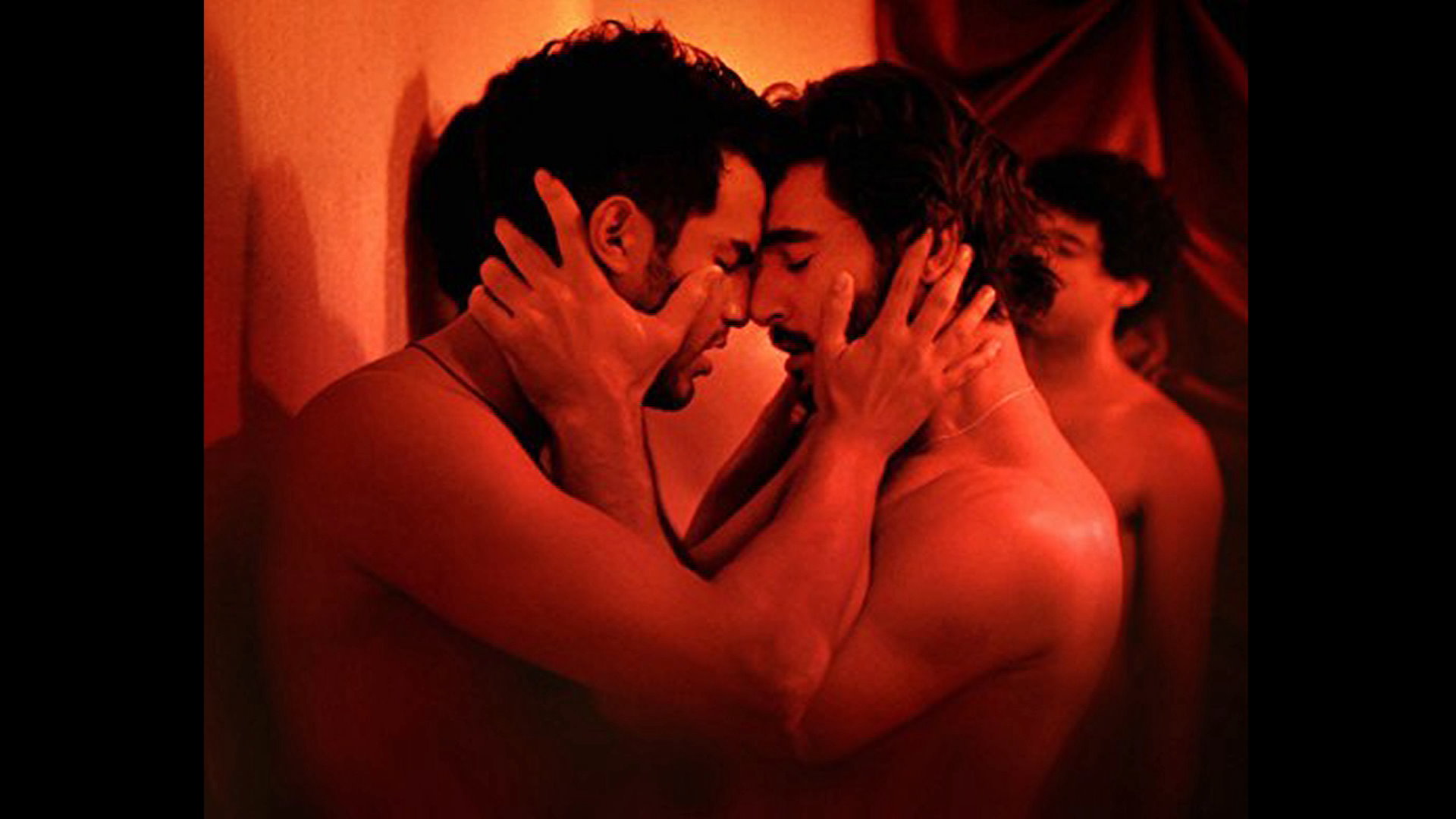
Out In The Dark (Hebrew: עלטה) is a 2012 Israeli romantic drama film Starring – Nicholas Jacob – Michael Aloni

    From Wikipedia

    Out in the Dark (Hebrew: עלטה) is a 2012 Israeli romantic drama film which premiered at the Toronto International Film Festival in September 2012 and in Israel in the Haifa International Film Festival in October 2012. It is the directorial debut of Michael Mayer (Israeli director) (מיכאל מאיר).[1][2][3][4]

    The film tells the story of the relationship between Roy, an Israeli lawyer, and Nimer, a Palestinian psychology student. The film was released commercially in Israel on 28 February 2013.

    The film has been accredited with 25 awards[5] throughout its creation, which includes the Audience Award at the Berlin Jewish Film Festival in 2013,[5][6] along with the FilmOut San Diego in 2013.[5][6]

    Plot

    The film is set in Israel and Palestine, where Palestinian student Nimer Mashrawi (Nicholas Jacob) is heading to Tel Aviv to meet his friend Mustafa N’amnais (Loai Nofi) at a gay bar. While at the bar, he meets a Jewish lawyer named Roy Scheffer (Michael Aloni). They fall in love, though Nimer struggles with the reality of their relationship. Later in the story, Palestinian society rejects Nimer because of his sexual orientation, whereas initially Israeli society rejects him due to his nationality. The situation is made worse for Nimer when he realises his brother Nabil Mashrawi (Jamil Khoury) is hiding a weapon stockpile for his militant friends.

    Nimer is granted a student visa to study at an Israeli university, giving him more opportunity to see Roy. However, he is soon approached by the Israeli Secret Service who pressure him into becoming an informant by threatening to cancel his visa. Nimer refuses and his visa is cancelled. Unbeknownst to Nimer, Mustafa has been living illegally in Tel Aviv under a similar arrangement. When he is unable to provide any more information, he is forcibly deported back to the West Bank where he is immediately abducted by Nabil and his gang of extremists. Nimer is forced to watch as his friend is tortured and executed for being homosexual and an informant.

    Later, while going through Mustafa’s phone, Nabil and his friends find a photo of Nimer. Despite their differences, Nabil lets Nimer escape rather than killing him. Nimer makes it to Roy’s house and hides there. Meanwhile, Nabil’s cache of weapons is discovered by the authorities. He is arrested and the police search for Nimer as an accomplice.

    Unable to hide him forever, Roy convinces an underworld figure and client of his law firm to smuggle Nimer to France. Though he promises to meet him there in the future, Roy is arrested while distracting the police so Nimer can escape. Nimer makes it to his ship and sails away, unaware of what has happened to Roy.

    Cast

    • Nicholas Jacob as Nimer Mashrawi
    • Michael Aloni as Roy Scheffer
    • Jamil Khoury as Nabil Mashrawi
    • Alon Pdut as Gil
    • Loai Nofi as Mustafa N’amna
    • Khawlah Hag-Debsy as Hiam Mashrawi
    • Maysa Daw as Abir Mashrawi
    • Shimon Mimran as Daniel