Baumwoll Archives Presents, A Tribute To “The Ghost & Mrs. Muir” Starring Gene Tierney & Rex Harrison

Click here to see the photo gallery

Click here to see the photo gallery

From Wikipedia

The Ghost and Mrs. Muir is a 1947 American supernatural romantic fantasy film starring Gene Tierney and Rex Harrison. It was directed by Joseph L. Mankiewicz, and is based on a 1945 novel written by Josephine Leslie under the pseudonym of R.A. Dick. In 1945, 20th Century-Fox bought the film rights to the novel, which had been published only in the United Kingdom at that time. It was shot entirely in California.

Plot

London at the turn of the century : Mrs. Lucy Muir, recently widowed by Edwin, an architect, moves to Whitecliff by the sea, despite her sister-in-law Eva’s sharp disapproval, and her mother-in-law Angelica’s sadness at Lucy taking away her young daughter Anna, and her loyal housekeeper Martha Huggins. The local estate agent Mr. Coombe reluctantly shows her Gull Cottage, in which she sees the portrait of the former owner, the roguish sea captain Daniel Gregg. They hear a ghostly laugh – Lucy, unafraid, remarks, “Haunted. How perfectly fascinating.” Coombe claims that Gregg committed suicide, but she persists in renting Gull Cottage, joking, “it’s too ridiculous…in the 20th century, to believe in apparitions.”

That night, Lucy experiences odd disturbances. Resolutely, she demands that the ghost show himself. Captain Gregg manifests, explaining his death four years ago wasn’t a suicide, but resulted from accidentally kicking the gas heater valve while sleeping. He wants Gull Cottage to house retired seamen, thus he frightens away other tenants. Due to Lucy’s headstrong attitude, and her appreciation of the house, Daniel reluctantly agrees to allow her to remain, promising to materialize only to her.

Eva and Angelica visit, wanting Lucy to move back to London, as Lucy’s gold mine investment — her only source of income — has “petered out” and “stopped paying dividends.” However Daniel, having warmed to her, asks her to stay, suggesting her in-laws should “shove off.” They decide to write a book from which she can profit; a dictation of his ocean-going memoirs. While writing the book, they fall in love. Realizing it’s hopeless, Daniel urges Lucy to find a living man. Lucy meets London publisher Mr. Sproule, encountering Miles Fairley, a suave author of children’s books under the pen name Uncle Neddy. Sproule agrees to publish Daniel’s lurid and sensational recollections, titled Blood and Swash, providing Lucy with an advance to buy Gull Cottage.

Fairley follows her back to Whitecliff and they begin a whirlwind courtship. Though initially jealous of their relationship, Daniel decides to leave, as he considers himself an obstacle to Lucy’s chance at happiness. While she sleeps, he imparts a mental suggestion that she alone wrote the book, and his presence was merely a dream. After declaring regret about never having had a life with her, he fades away.

Fairley cancels a planned visit to Gull Cottage, saying he will be in London for a few days. Lucy visits London to sign a contract, and obtains Fairley’s address in the city from the office clerk to pay a surprise visit. She discovers that Fairley is already married with two children, and Mrs. Fairley sympathetically tells her, she’s not Fairley’s first extramarital affair. Heartbroken, Lucy returns to Whitecliff to spend the rest of her life as a recluse, with Martha looking after her.

Years later, Mrs. Fairley has had enough of her husband’s philandering and divorces him, taking full custody of their children. Anna goes to university and returns with a Royal Navy lieutenant she plans to marry. Anna reveals to her mother that she knew about her mother’s relationship with “Uncle Neddy”, and that she believes that she too saw Daniel, whom she regarded as a childhood crush, meaning Daniel broke his promise to Lucy not to show himself. Anna argues that Daniel must be real since they both saw him, but Lucy still believes that it was a dream and reasons it is more logical to conclude that she transmitted her dream to Anna through her stories than to believe in ghosts. She also tells Anna that although she had at times been lonely, she was never truly alone.

Many years later, the elderly Lucy is now ailing, and Anna’s daughter (also named Lucy) is engaged to an airplane captain; Anna believes that affection for captains runs in their family. Lucy rejects the glass of hot milk Martha has brought for her with a complaint that she is tired. After Martha leaves the room, Lucy dies. Daniel returns and approaches her, whispering that she will never be tired again. Taking his hands, her young spirit leaves her aged body and greets him with a loving smile. Unseen by Martha, the couple leave the house and walk arm-in-arm into an ethereal mist.

Cast

Click here to see the photo gallery

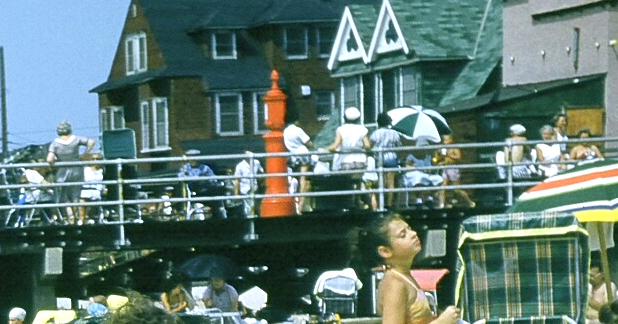
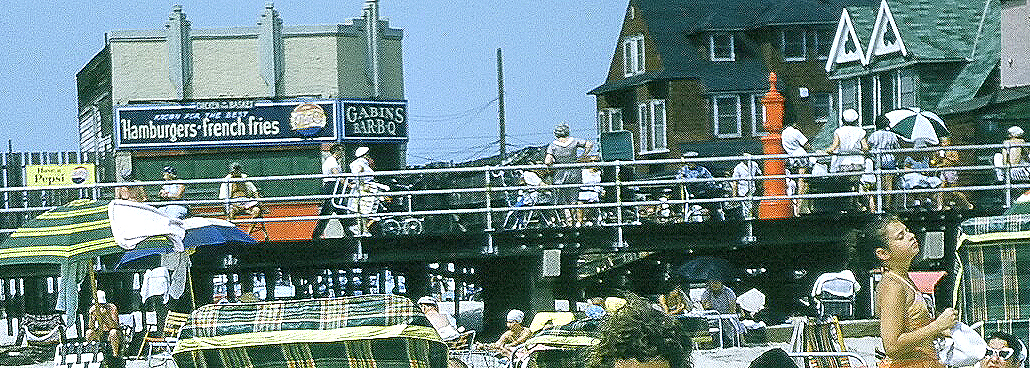
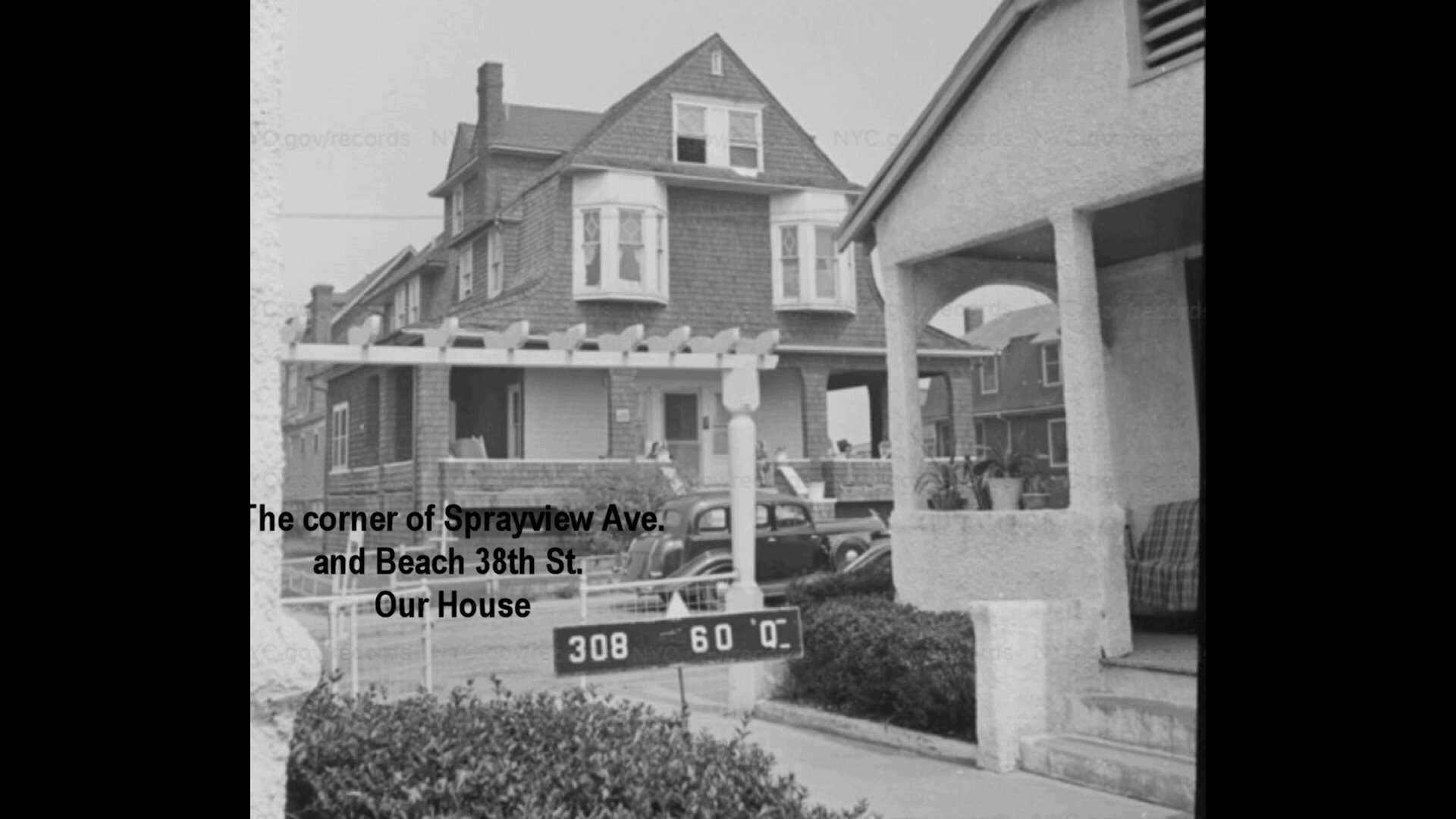
The History Of The Baumwolls & The Smilowitz’s, In Edgemere – Far Rockaway New York. From 1915 To 1970s. Our houses and all of our memories.

,

It has taken me 20 years to find pictures of our houses on Beach 38th street and Beach 34th street I can finally rest. I hope you enjoy my little film. In memory of a place that is only in our minds.

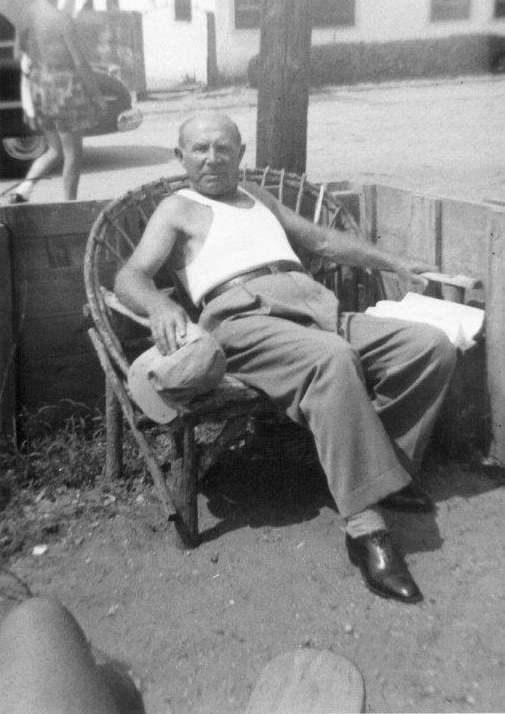
The Rockways You’re seeing my grandfather Nathan Baumwoll in 1927 having fun on top of the Roxy Movie Palace in New York City that he helped put the sound in. My grandfather comes to America from Warsaw Poland in 1912. My family was there for more than 200 years. By 1915 he’s working for Jacob Fabian, an early silent film theater owner who built some of the great Movie Palaces. At 15, Nathan was one of his projectionists when they still turned the film. He would go on to do his own little Reels. He would be written about in the newspapers’ and be compare to Georges Méliès. He would be a projectionist his whole life. Fabian sells his circuit of theaters and all the Reels to Warner Brothers in 1927. They in turn begin Warner Brothers Studios

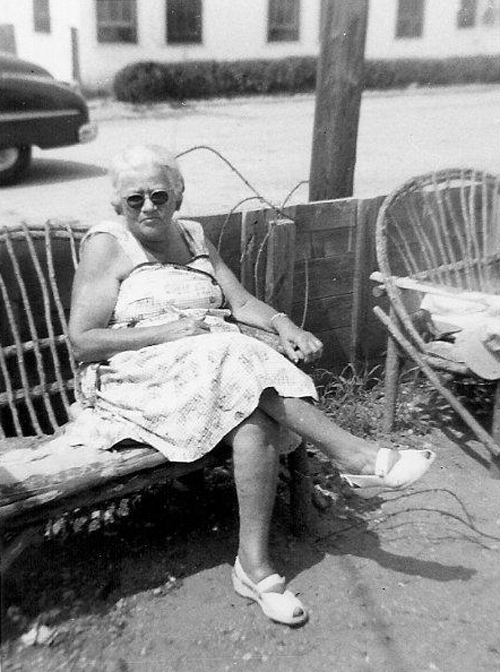
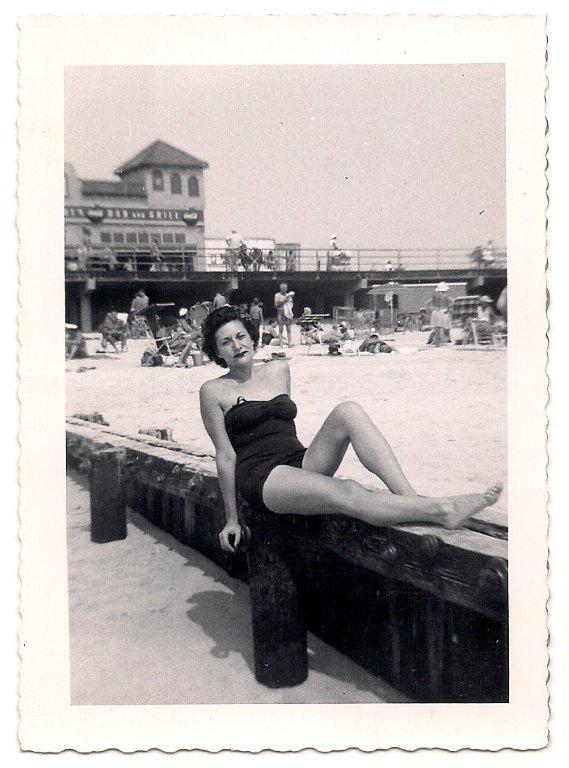
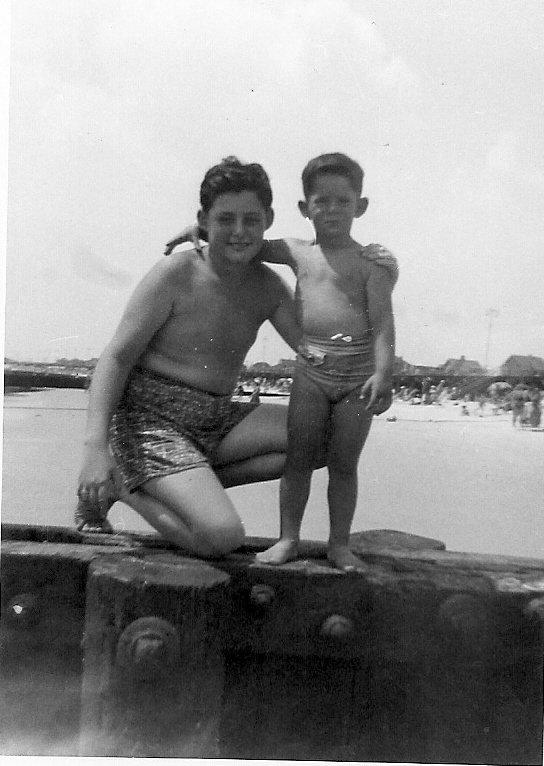
Eva Smilowitz Baumwoll My grandmother was the person who played the piano in the silent movie houses. They would marry in 1920 when they were around 20 years old. My grandmother’s family, The Smilowitz, lived in the Rockaways as early as 1915. My grandparents, Nathan and Eva Baumwoll, would go on to own three houses in the Rockaways. One was on Beach 38th Street that I used to go to. The other was on Beach 34th Street. They were family gathering homes for the summers and they ran them as summer lodgings for people getting away from the city. There were two other houses, one on Reads Lane and an earlier one in Baldwin Long Island. In later years, they ran the Commodore Hotel and the Euclid Hotel on South Beach in Miami Beach Florida.

Photograph of Jack and Roslyn Baumwoll

Bruce Baumwoll

How was all that losted

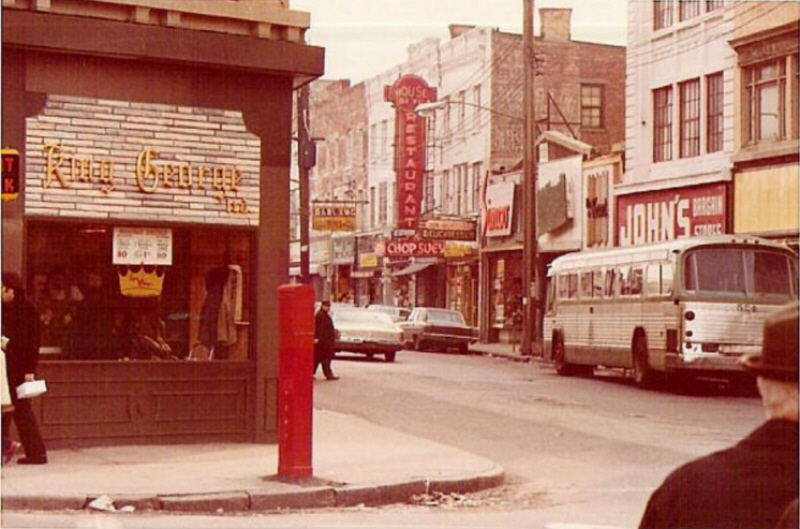
Robert Moses is blamed for having destroyed more than a score of neighborhoods by building 13 expressways across New York City and by building large urban renewal projects with little regard for the urban fabric or for human scale. Robert Moses (December 18, 1888 – July 29, 1981) was an American urban planner and public official who worked in the New York metropolitan area during the early to mid 20th century. Despite never being elected to any office, Moses is regarded as one of the most powerful and influential individuals in the history of New York City and New York State. The grand scale of his infrastructural projects and his philosophy of urban development influenced a generation of engineers, architects, and urban planners across the United States.

The Day I Met David Hockney At Laurel Canyon Dog Park in Los Angeles Where His Dogs and Our Dogs Played and He Signed Two Pieces of Art For Me.

David Hockney!

Born in 1937, Hockney is a pop art legend whose depictions of pools, cherry blossoms and sausage dogs brighten up the contemporary art scene

When Andrew and I lived in West hollywood California we used to take our dogs to run in Laurel Canyon dog park. At that time David Hockney was having an exhibition at Los Angeles County Museum of Art. his art was everywhere. Each piece was magnificent. In one section of the exhibition was work that he did with Xerox Photocopying. As I mentioned before I was a paper man, selling paper ephemera. The Xerox art on the walls, there was one from interview magazine and I believe the other one was from life magazine. The narrative on the wall talked about him going to Laurel Canyon Dog park with his dachshunds. I went to the museum shop to see what they were selling and it was a poster from the show. I decided at that moment, I would search out the magazines that he put art in that were on the wall in the museum that he had made for the masses. It took me awhile but I found them in a store on Venice Blvd that sold all kinds of old magazines and books. It was one of my favorite stores to find paper ephemera. I left the magazines in the car knowing that I had made my mind up that I would take my dogs up to the park in hopes that he would be there with his dogs one day. Sure enough on the first day that I went, there he was. I was so elated that I almost could not contain myself. My dogs first played with his dogs and then I introduced myself. I told him the story I just told you here and he laughed and laughed. he told me to go to the car, get the magazines and he would sign the pages that had his xerox art in them. As he began to sign them, he began to doodle on them with a sharpie adding new detail and then signed them to Andrew and I. He laughed again and said you will be the only person in the world that will have these. I laughed back with him and said I could never afford your work and this is beyond anything I could have imagined. He gave me a hug and my wish came true. I had two pieces signed and doodled by the one and only David Hockney, one of the great modern artists.

Here are the pieces that David Hockney signed and doodled on to both of us.